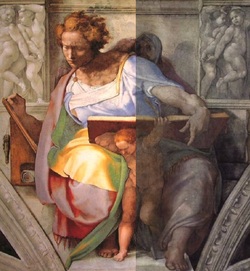
 Before (right) and after (left) restoration
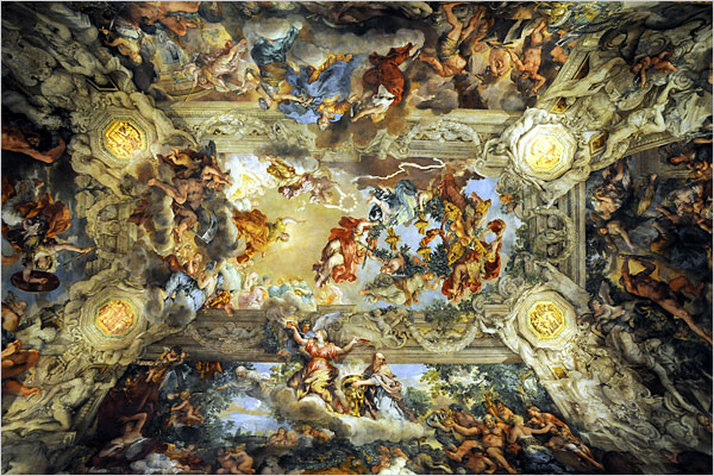
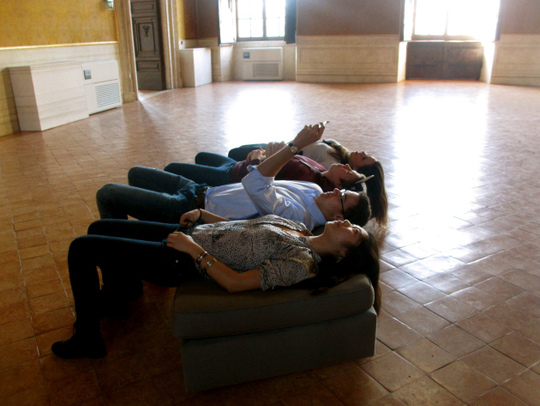
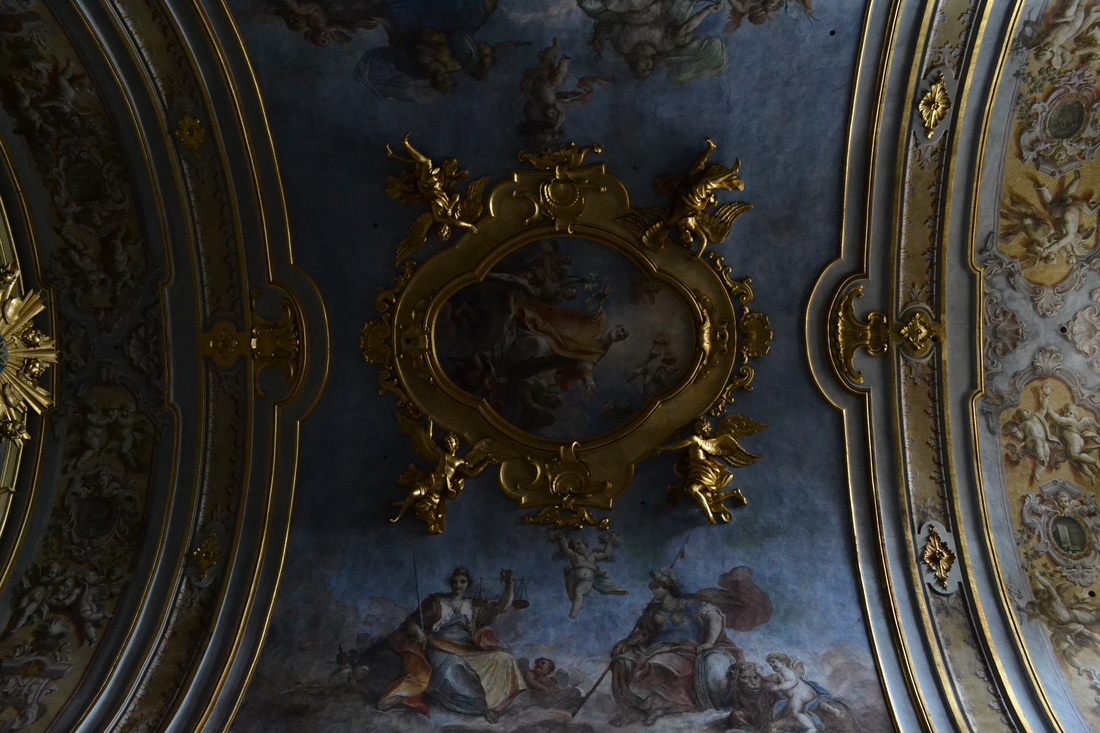
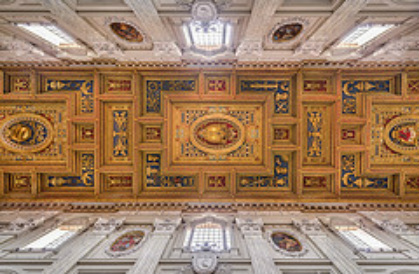
 Upon entering one of the many spectacular churches in Rome, one’s attention is likely to immediately be directed towards the ceiling. This is ironic because in any church lacking ceiling decoration, one may never notice that there is anything missing. He or she could probably not even recall the color or texture of the plain ceiling. When a ceiling is decorated, however, it instantly draws attention and awe; inevitably, it becomes one of the most beautiful aspects of the church. The ceiling plays many different roles in a church and its characteristics may vary depending on the era in which it was created: Gothic, Renaissance or Baroque.
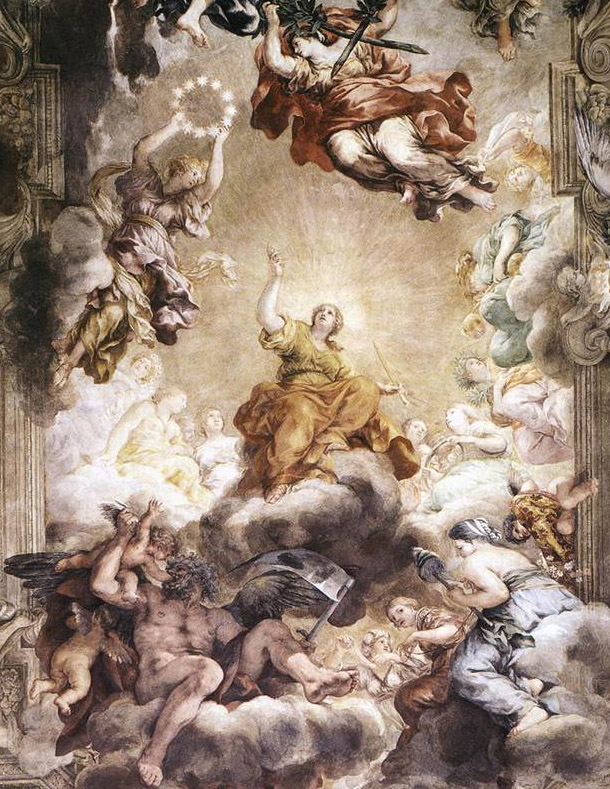
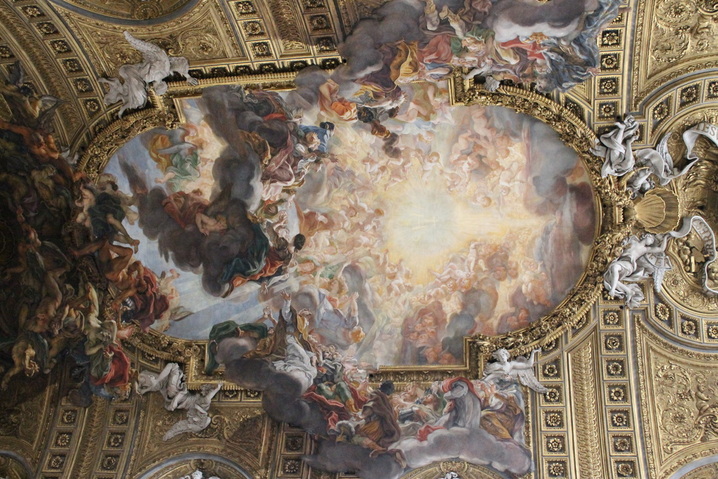
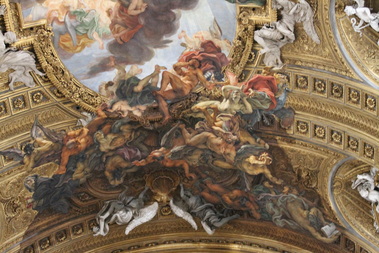
Before coming to Rome, the ornamentation of ceilings was never something that we had encountered. Because of this, we were captivated upon entering our very first church here in Rome. We had never seen anything, let alone a ceiling, decorated so ornately. Following this fascination came curiosity. Why decorate a ceiling? What purpose does this serve? What we soon discovered was that the display of art on a ceiling is another way to further convey the message of the church. It communicates theology as biblical scenes are often depicted, conveying the beliefs of that particular religion. The perfect example of this would be the fresco on the ceiling of the Jesuit church, Il Gesu. This ceiling displays the doctrine of the Jesuits as Protestant heretics are cast out of Heaven, while the Jesuits are shown ascending into Heaven. Essentially, the ceiling acts as a giant canvas for the church to broadcast its ideals and practices.
Aside from its theological purposes, the ceiling is also used to further decorate a church. It plays a large part in the overwhelming grandeur of a place of worship. Many times, the tremendous size and decoration of a church is meant to play a role in the lack of human scale. The purpose of this is to express the message that the human being is small and powerless, while God is great and omnipotent. It is not uncommon to enter a church in Rome and feel as though you are a bug, waiting to be squashed and, quite honestly, this was the exact intention of the artists and architects; with this feeling comes a sense of humility before God.
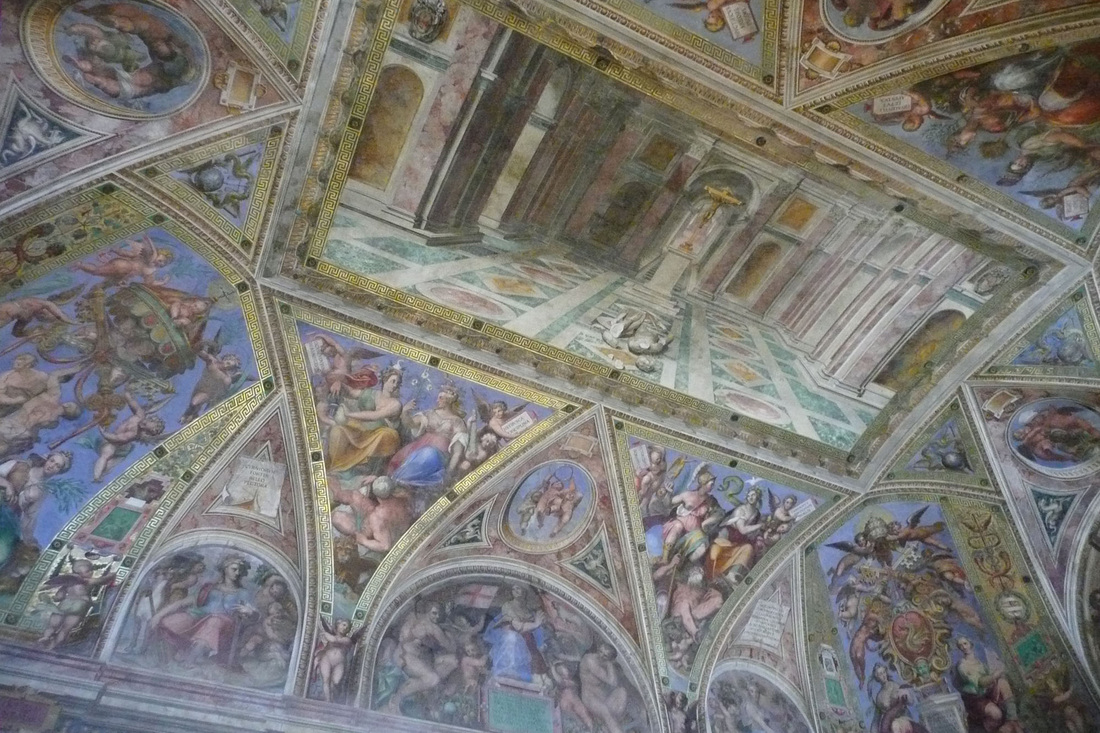
The decoration of ceilings was also embraced for the mere fact that, as a piece of art, its safety was ensured from dust and the fingerprints of onlookers. On the contrary, it may become subject to the damage of candle smoke, and such was the case of Michelangelo’s Sistine Chapel. In 1980, Pope John Paul II announced that restorations would be made to the famous frescoes. This topic created a great deal of controversy, people disagreed with the tampering of priceless works of art such as this and a petition was signed by well known artists, including Andy Warhol and George Segal, asking to halt the restoration process. Despite the disapproval of many critics, the restoration of the famous ceiling began, unveiling the bright and rich colors that Michelangelo had originally intended.
Before coming to Rome, the ornamentation of ceilings was never something that we had encountered. Because of this, we were captivated upon entering our very first church here in Rome. We had never seen anything, let alone a ceiling, decorated so ornately. Following this fascination came curiosity. Why decorate a ceiling? What purpose does this serve? What we soon discovered was that the display of art on a ceiling is another way to further convey the message of the church. It communicates theology as biblical scenes are often depicted, conveying the beliefs of that particular religion. The perfect example of this would be the fresco on the ceiling of the Jesuit church, Il Gesu. This ceiling displays the doctrine of the Jesuits as Protestant heretics are cast out of Heaven, while the Jesuits are shown ascending into Heaven. Essentially, the ceiling acts as a giant canvas for the church to broadcast its ideals and practices.
Aside from its theological purposes, the ceiling is also used to further decorate a church. It plays a large part in the overwhelming grandeur of a place of worship. Many times, the tremendous size and decoration of a church is meant to play a role in the lack of human scale. The purpose of this is to express the message that the human being is small and powerless, while God is great and omnipotent. It is not uncommon to enter a church in Rome and feel as though you are a bug, waiting to be squashed and, quite honestly, this was the exact intention of the artists and architects; with this feeling comes a sense of humility before God.
The decoration of ceilings was also embraced for the mere fact that, as a piece of art, its safety was ensured from dust and the fingerprints of onlookers. On the contrary, it may become subject to the damage of candle smoke, and such was the case of Michelangelo’s Sistine Chapel. In 1980, Pope John Paul II announced that restorations would be made to the famous frescoes. This topic created a great deal of controversy, people disagreed with the tampering of priceless works of art such as this and a petition was signed by well known artists, including Andy Warhol and George Segal, asking to halt the restoration process. Despite the disapproval of many critics, the restoration of the famous ceiling began, unveiling the bright and rich colors that Michelangelo had originally intended.
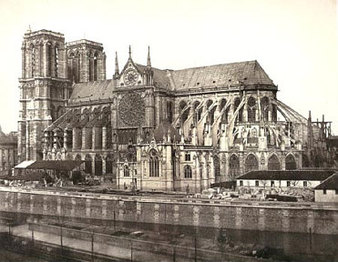
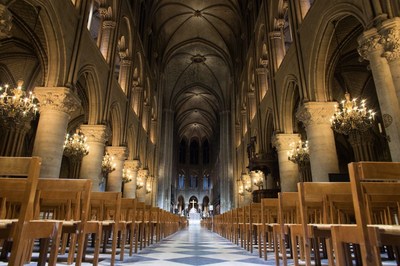
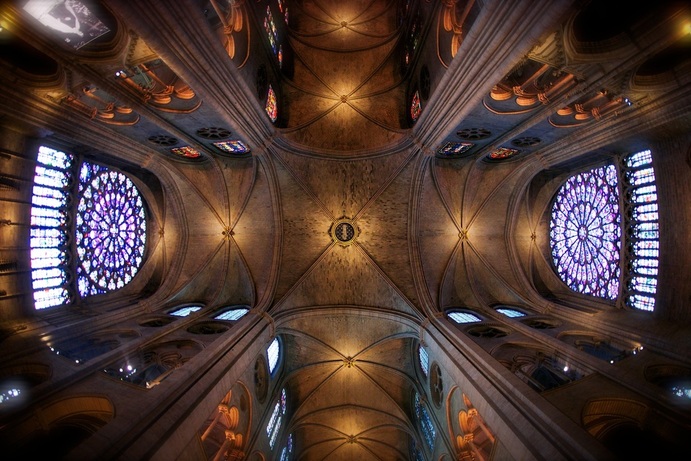
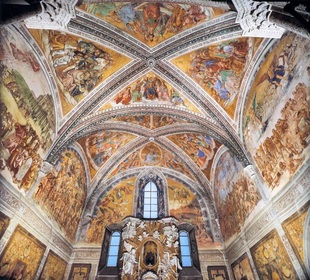
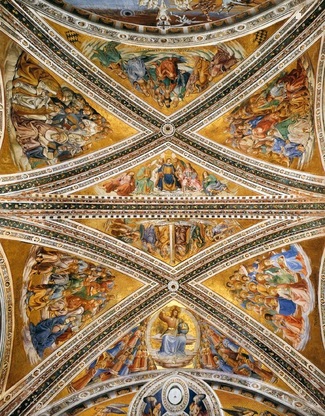
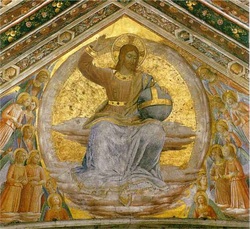
Although the role of ceilings is consistent throughout the centuries, the characteristics of these ceilings vary greatly from era to era. The Gothic era, beginning in the early 1200’s and stretching as far as 1500, can be described in two words: height and light. Ceilings were raised upon the incorporation of pointed arches. The Gothic era took the Roman arch and made it pointed. It then introduced the structure of ribbed vaulting to evenly distribute the weight of the ceiling. Because of the many stained glass windows that can also be found inside a Gothic church, flying buttresses were added to the outside of the building for greater support. These massive churches, which came to be known as “stone Bibles”, stressed the importance of the supernatural. This Gothic approach was just one of the three artistic styles found in the medieval age. The interest of this era was found solely in the representation of the image of Christianity rather than the exact human anatomy. Art was created to glorify God and not man. Examples of this can be seen in the only Gothic basilica in Rome, Santa Maria Sopra Minerva. Ribbed vaulting divides the ceiling panels into four sections and simple representations of Christ can be found in each panel of the blue and gold ceiling. Also, one of the most famous Gothic-style buildings is London’s own Westminster Abbey. While the Abbey does not display frescoed or picturesque ceilings, it remains true to the architectural style of a Gothic ceiling with its pointed arches and ribbed vaulting.
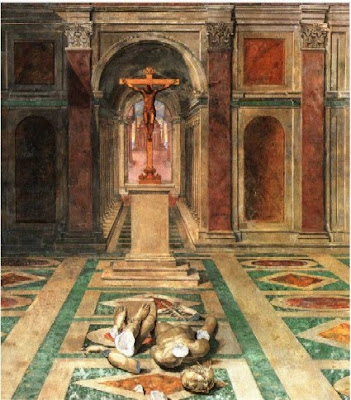
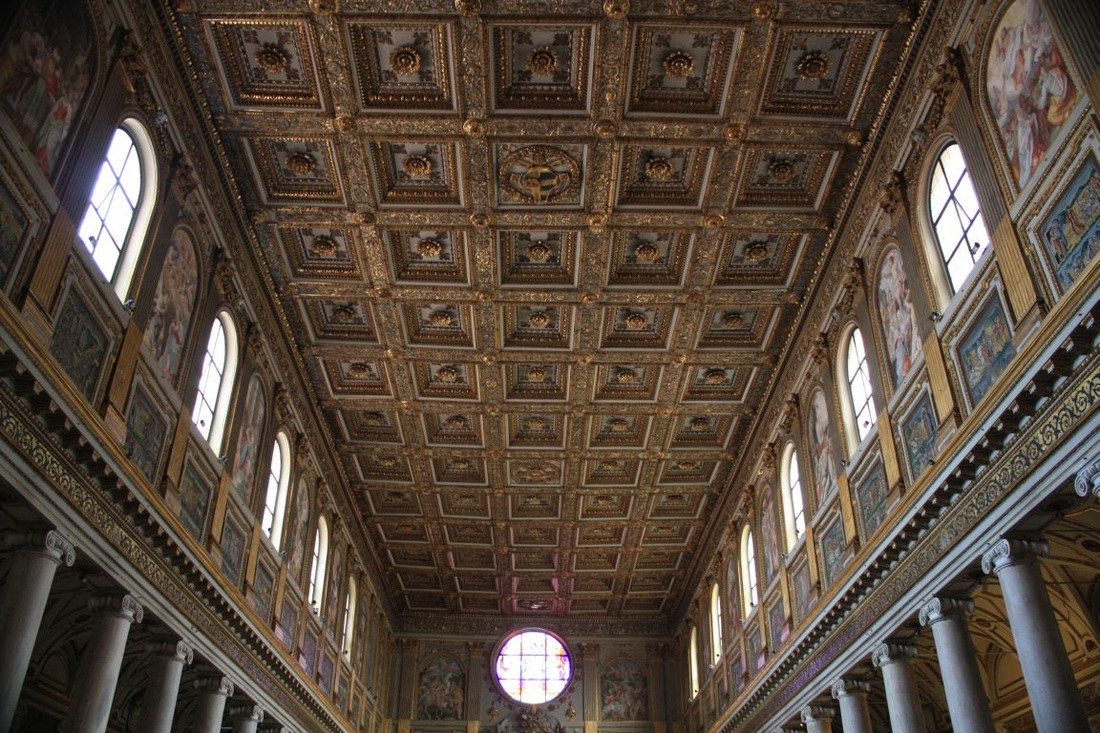
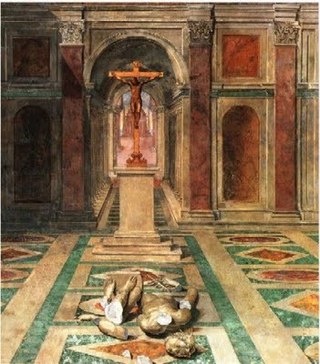
Like the Gothic era, Renaissance style holds specific characteristics that distinguish it from other eras. Beginning in Florence in 1350 and continuing until 1600, the Renaissance, meaning “rebirth”, can be summarized as a rediscovery of ancient Greek and Roman art. Unlike the medieval age, which stressed the importance of the supernatural, the interest of the Renaissance was found in the scientific study of the human body and the natural world. The idea of humanism was introduced and it emphasized worldly concerns over spiritual matters. These ideas and values were represented in the art of this time as the human body was depicted in immense detail and accuracy. There were many artistic innovations that came along with the Renaissance as well, such as oil paintings stretched on canvas, the use of perspective, the contrast of light and darkness, and the pyramid configuration. There was also a style of ceiling painting called di sotto in sù, which means, “seen from below” or “from below, upward”. This technique relies on the uses of both foreshortened figures and a vanishing point. This was done to give the impression of true space on a painted or frescoed ceiling. Most of the ceilings of this time period were either a barrel vault or a flat ceiling with coffered squares. The most famous example of this era would be Michelangelo’s frescoes of the Sistine Chapel’s ceiling. The number of figures, and the detail to which they are painted, portray the idea of humanism perfectly. Again, the Renaissance differs from the Gothic age through its emphasis on the natural over the supernatural, and the Sistine Chapel and its ceiling clearly display this fact.
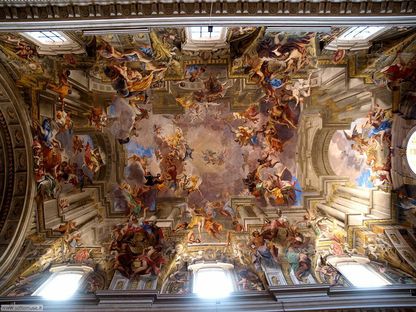
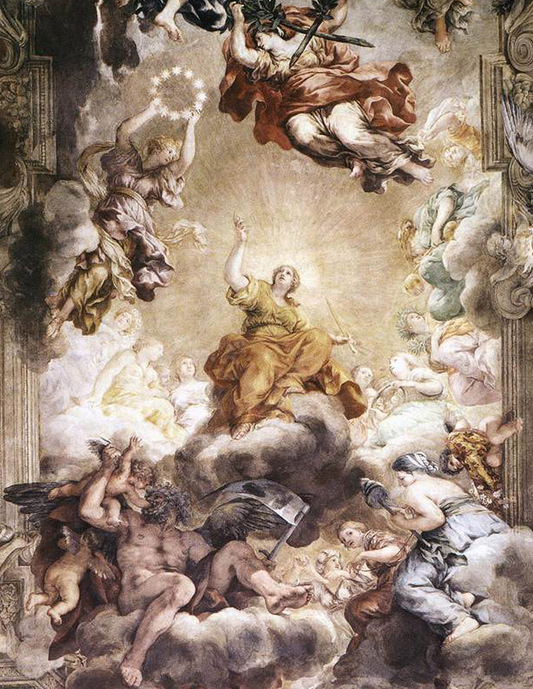
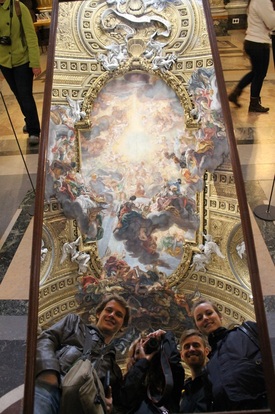
The Baroque age, like Gothic style and the Renaissance, has several defining characteristics. This time period, beginning around 1590 and ending in 1725, was heavily influenced by scientific advancement. One key feature of Baroque architecture is the oval shape, which was inspired by Newton’s Laws of Motion. The term Baroque comes from the word barocco, which means “an irregular pearl”. Its features include a lack of balance, powerful movement, energy, dramatic interpretation of the subject matter and strong lighting. A few artistic giants of the time were Bernini, Borromini and Caravaggio. A key element of the Baroque style ceilings is quadratura. This is the opening up of walls through illusion. This concept relied on the seventeenth century theories of architecture and perspective. Because of this, quadratura become more effective than the Renaissance’s di sotto in sù. An example of quadratura can be seen in the ceiling of Sant’Ignazio. The artist, Andrea Pozzo, used the concept of perspective to create imaginary height on the flat surface of the church’s ceiling. The fresco appears to ascend into Heaven as the columns stretch upward, however, what the viewer may not initially realize is that the ceiling is actually flat and the illusion of height is only due to the artist’s play on perspective.
Whether the style resembles the Gothic, Renaissance or Baroque era, the purpose of a church ceiling is fulfilled through the artistic and architectural expression of the beliefs of the church. From the supernatural elements of the Gothic era, to the importance of humanism in the Renaissance, to the play on perspective in the Baroque style, every time period holds unique characteristics that serve a similar purpose. Today, however, ceilings, like the rest of the church, have lost their grandeur. They are no longer painted or ornately detailed. Instead, function has become more important than decoration. They have become practical, serving only the purpose of holding up the roof. With this loss of splendor in the current age, however, comes a greater appreciation of the ceilings of the past; amid the absence of embellishment today, one becomes more capable of recognizing and relishing the magnificence of the decoration of past centuries.
Sources:
Dr. Cole's Lecture
http://en.wikipedia.org/wiki/Ceiling
http://en.wikipedia.org/wiki/Illusionistic_ceiling_painting
http://en.wikipedia.org/wiki/Restoration_of_the_Sistine_Chapel_frescoes
Like the Gothic era, Renaissance style holds specific characteristics that distinguish it from other eras. Beginning in Florence in 1350 and continuing until 1600, the Renaissance, meaning “rebirth”, can be summarized as a rediscovery of ancient Greek and Roman art. Unlike the medieval age, which stressed the importance of the supernatural, the interest of the Renaissance was found in the scientific study of the human body and the natural world. The idea of humanism was introduced and it emphasized worldly concerns over spiritual matters. These ideas and values were represented in the art of this time as the human body was depicted in immense detail and accuracy. There were many artistic innovations that came along with the Renaissance as well, such as oil paintings stretched on canvas, the use of perspective, the contrast of light and darkness, and the pyramid configuration. There was also a style of ceiling painting called di sotto in sù, which means, “seen from below” or “from below, upward”. This technique relies on the uses of both foreshortened figures and a vanishing point. This was done to give the impression of true space on a painted or frescoed ceiling. Most of the ceilings of this time period were either a barrel vault or a flat ceiling with coffered squares. The most famous example of this era would be Michelangelo’s frescoes of the Sistine Chapel’s ceiling. The number of figures, and the detail to which they are painted, portray the idea of humanism perfectly. Again, the Renaissance differs from the Gothic age through its emphasis on the natural over the supernatural, and the Sistine Chapel and its ceiling clearly display this fact.
The Baroque age, like Gothic style and the Renaissance, has several defining characteristics. This time period, beginning around 1590 and ending in 1725, was heavily influenced by scientific advancement. One key feature of Baroque architecture is the oval shape, which was inspired by Newton’s Laws of Motion. The term Baroque comes from the word barocco, which means “an irregular pearl”. Its features include a lack of balance, powerful movement, energy, dramatic interpretation of the subject matter and strong lighting. A few artistic giants of the time were Bernini, Borromini and Caravaggio. A key element of the Baroque style ceilings is quadratura. This is the opening up of walls through illusion. This concept relied on the seventeenth century theories of architecture and perspective. Because of this, quadratura become more effective than the Renaissance’s di sotto in sù. An example of quadratura can be seen in the ceiling of Sant’Ignazio. The artist, Andrea Pozzo, used the concept of perspective to create imaginary height on the flat surface of the church’s ceiling. The fresco appears to ascend into Heaven as the columns stretch upward, however, what the viewer may not initially realize is that the ceiling is actually flat and the illusion of height is only due to the artist’s play on perspective.
Whether the style resembles the Gothic, Renaissance or Baroque era, the purpose of a church ceiling is fulfilled through the artistic and architectural expression of the beliefs of the church. From the supernatural elements of the Gothic era, to the importance of humanism in the Renaissance, to the play on perspective in the Baroque style, every time period holds unique characteristics that serve a similar purpose. Today, however, ceilings, like the rest of the church, have lost their grandeur. They are no longer painted or ornately detailed. Instead, function has become more important than decoration. They have become practical, serving only the purpose of holding up the roof. With this loss of splendor in the current age, however, comes a greater appreciation of the ceilings of the past; amid the absence of embellishment today, one becomes more capable of recognizing and relishing the magnificence of the decoration of past centuries.
Sources:
Dr. Cole's Lecture
http://en.wikipedia.org/wiki/Ceiling
http://en.wikipedia.org/wiki/Illusionistic_ceiling_painting
http://en.wikipedia.org/wiki/Restoration_of_the_Sistine_Chapel_frescoes
 RSS Feed